Saturday, July 24, 2010

Mission (im)possible


“Our children are much less scared of dogs.”
“It is such a relief not to have all these puppies walking on the streets!”
“Please help the dogs to get rid of their skin problems!”
“Can I get my dog spayed too?”

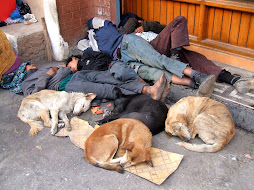
These are some of the comments we got from local communities after we introduced our pilot Animal Birth Control/Anti Rabies (ABC/AR) programme. We called the programme ‘Patan Rescue” because it felt like a rescue mission. With over 35,000 stray dogs in the urban areas of Kathmandu Valley alone, and the majority of them suffering from malnutrition and disease such as skin problems, open sores, tumours, birthing complications and –last but not least- much feared rabies, our mission to create a smaller, healthier dog population seemed Mission Impossible.

With the help of a grant from HSI US and a matching grant from HSI Australia, we felt secure enough to take the first important steps: building a rehabilitation center, training our vets in spaying techniques and buy an ambulance. The local forest committee of Chobar, a beautiful historical village build on a hill on the outskirts of Kathmandu Valley, provided us with a plot of land. An architect friend designed an office building with operation theatre made entirely from renewable materials: unfired mud bricks, to be covered with cow dung.

Training our staff was a tough one, as virtually no vet in Nepal knows how to conduct the preferred sterilisation method, flank spaying. We were helped by the Kathmandu Animal Treatment Center (KAT) whose vets were trained by Help in Suffering India.

Our happiness knew no bounds when a grant from 30 Million d’Amis (France) enabled us to buy a Maruti Gypsy car, acting as Kathmandu’s first animal ambulance.

Even before the center was completed sick and injured dogs were dropped at our premises. Among the first residents was Toffee, a blind Labrador, abandoned by his owner. He was a handful in the beginning but once Toffee understood the parameters he became a very affectionate dog. A few months later Toffee was adopted by Volunteer Director Pramada Shah and travels with her wherever she goes. He regularly visits our office and his old home at the Chobar shelter!

Another early patient was Marky. Terrible malnourished, Marky suffered from rickets and a bone disorder. His condition is a painful one and apart from providing with nutritious food there was little we could do to ease his discomfort. Marky became close friends with Dutch volunteer Aicha Boele, who decided to take him to Holland. There he will receive physiotherapy and specialised care to ease his discomfort.

Yet another suffering creature staying at Chobar was Namuma, a hairless, extremely weak puppy. Namuna turned out to be a great character who loved to be cuddled but at the same time proved to be a good guard dog. When his hair grew back Namuna developed a shiny black coat with dots on his belly. An elderly lady adopted him; he now guards a large compound while keeping his ‘mummy’ company.

On October 17 we celebrated Kukur Tihar, or national dog worship day, by officially opening the Chobar Animal Sanctuary. In the next two months time 35 dogs were treated and rehabilitated. On December 28 our vets Surendra and Sudeep spayed and vaccinated the first batch of stray dogs. On April 13 we spayed and vaccinated Putali, a lovely black dog from Taudaha village, the 100th dog.

By now we feel confident that we can make a lasting change in the situation of stray dogs in Kathmandu Valley. We have launched a 2-year programme called “Kathmandu Rescue” in which we hope to treat and/or spay and vaccinate 1250 dogs. We also hope to educate and work closely together with the different communities from where the dogs are taken. The two municipalities involved will gradually increase its involvement by providing staff and finances. We will teach children in local schools about animal welfare and encourage them to be involved.

Making a lasting difference means we need to prepare the next generation. They need to develop a different relationship with stray dogs. Not one based on fear, but based on trust, love and care. We are set to make it happen!

Lucia de Vries
Volunteer Director Animal Nepal

Donkey in the back


Night was falling when I drove Animal Nepal’s rickety ambulance towards the Donkey Sanctuary. A man on a motorbike passed the car and looked inside. His face froze; he decreased his speed. Soon he drove along the ambulance, glancing inside.

The man was not eve teasing. He was looking at the patient in the back of the car, an adult white donkey, positioned rather uncomfortable in the tiny car. The donkey’s head partly stuck outside the window, her nostrils flaring. Once in a while she tried to reach me with her nose, as if to say, ‘please take me out of here.’

That morning Animal Nepal’s three vets, Sudeep, Surendra and Parisha, and myself drove to a remote brick factory in the Kathmandu Valley. The ambulance had trouble getting there; we had to cross streams, and navigate around boulders and bricks, apparently fallen off trucks. The kiln was located in a beautiful spot, on the shores of the Bagmati river, amidst fields covered in flowering bright yellow mustard, dotted with traditional mud houses. A scene from a tourist postcard.

However, when we parked the car inside the factory a very different picture emerged. Children dressed in rags, carrying younger siblings on their back, surrounded the ambulance. Their faces were covered in dust; some of the toddlers’ heads were shaven to prevent lice. There were no adults around; while the parents worked the children had to take of themselves and each other. None of the children had any toys. A boy wearing a dirty Nepali topi[1] pulled a wooden brick mold behind him through the dust.

We had to walk up a hill to find what we came for. The open air factory employs some fifty donkeys, mules and horses to carry unfired mud bricks from a hilltop down to the kiln where they are baked. Today we brought a first aid box and planned to teach the donkey owners (four in total) how to use the medicines.

The owners in this particular factory are cooperative, and often call us when a donkey is sick. Still, we were shocked by the conditions of the animals. They were overloaded and continuously beaten by wiry handlers, boys from poor families, as young as eleven.

The vets immediately started treating the animals. Apart from saddle wounds the donkeys and mules suffered from hoof problems and eye infections. One severely malnourished mule stood alone, too weak to move. “Minimum one week rest and mineral supplements twice a day,” adviced Sudeep, after providing the poor creature with a medicine to promote digestion. A mule suffering from laminitis, a very painful condition caused by inflammation of the hoof, was given two weeks rest.

“Please have a look at one of my new donkeys,” one owner requested, “she is blind and her back legs don’t work properly.” We walked over to the night shelter and found a pathetic looking donkey, lying on the path. The creature was dehydrated and malnourished, and seemed unable to walk. The vets became agitated. “Why did you not call us earlier? We won’t allow you to keep this donkey here in these conditions,” they told the owner.

A long debate started, in which the owners explained that someone took the donkey here from another kiln, and that, yes, he was agree to send the animal to our sanctuary. What’s more, he and his friend would personally carry her to the car.

That was how Shree Devi, as the donkey was named, ended up in the back of our ambulance.
Shree Devi at first was apprehensive. After the long, bumpy ride to Godavari, we had to literally pull her to her retirement home, supporting her back legs.

After her arrival the twelve other resident donkeys left the night shelter to sniff at Shree Devi. She easily passed the test. Then she enjoyed the first of many nourishing meals in her new home.

Animal Aid Abroad in 2010 supports Animal Nepal’s working donkey outreach programme and sanctuary for the second year. We support some 500 donkeys in ten brick kilns and hope to expand our programme to more brick factories later this year. Donkey and kiln owners claim that thanks to our work the conditions of donkeys have greatly improved. They say that the loads are smaller, that beating has decreased, and that the general health conditions of the animals are far better than before.

To some extent this is true – inputs such as regular de-worming and vaccinations, first aid boxes, improved harnesses, hoof cleaners, health camps and educational workshops have had a visible impact. Recently three new staff have been recruited to intensify our support services and emergency shelters are being constructed in key brick factories.
However, we still occasionally come across abused and injured donkeys such as Shree Devi. Next time when we visit a brick kiln we hope to leave empty handed…

Lucia de Vries
Volunteer Director Animal Nepal

Wednesday, August 26, 2009

Over 1000 signatures against donkey misery!

Animal Nepal together with the Animal Welfare Network Nepal (AWNN) on May 19, 2009 handed over a petition signed by over one thousand people from all over the world to stop donkey abuse to the Joint Secretary at the Ministry for Agriculture and Cooperatives, Dr Hari Dahal.


The petition titled 'Stop donkey misery in Nepal' was signed by 1036 people from countries like Nepal, India, US, UK, Italy, Australia, France, Germany, Norway, Mexico, Canada, South Africa, Netherlands, Belgium and others. The purpose of the signature campaign is to raise awareness to stop cruelty on working animals like donkeys. The petition demands concerned authorities and donkey owners to introduce a care system for these animals that suffer from malnutrition, open sores, lacerations, and general neglect.


AN/AWNN also urged the Joint Secretary to implement the Animal Transportation Act and wished to participate in drafting of the Animal Welfare Act. Mr Dahal was positive about these concerns and expressed commitment to take initiative on monitoring the execution of the Animal Transportation Act or the Pasu Dhuwani Mapdanda 2064.


AN Director Pramada Shah, after handing over the petition hoped that the ministry would cooperate in raising animal welfare issues and that the Animal Welfare Act would soon be finalised and send to the Parliament.

Friday, June 26, 2009

Miracle donkey

Miracles do happen. Otherwise, how to explain this story?


Flora was rescued from a brick kiln on a hot day in May. She was malnourished and her hips were covered in bruises from overloading. Flora's hoofs had grown so long, they actually pointed upwards. Flora found a perfect home at the Marston's, a British family that has lived in Nepal since the 60s. Here she shares a lovely garden with five rescued dogs and a flock of ducks, recovered from the butcher's. One of the first things Flora did was walk around the house, and roll on her back in the garden. She must have felt she had arrived in heaven.


A month after her arrival, Robin and Wendy noticed a swelling in Flora's lower stomach. They called the vet, who adviced a drug against fluid retention. A few hours later the vet arrived, felt around, and pulled out.....two feet! Three people rushed to help to pull out what everyone thought had to be a dead fetus. But as soon as the fowl fell on the ground it started moving. Ten minutes later it stood on its four legs. Puja was born.


Puja is a healthy and curious foal, a true heart breaker, who enjoys making friends with dogs, ducks and people. Her mum, Flora, is a caring and proud mum.


At Animal Nepal we feel greatly encouraged by stories such as these. This story shows the resilience of abused working animals, when given a new leash of life. It shows that with a dosis of TLC, nutritious food and supportive medicines, donkeys like Flora, after a life of neglect and abuse, make great pets. It shows that despite the many challenges we face we can make a difference in the lives of working donkeys, starting with Flora and Puja.

Monday, April 13, 2009

Putting a Smile on your Face

The thousands of children who live in work in brick kilns in Kathmandu District during the brick season (December-June) have little reason to smile. They come from the poorest districts of Nepal, or Bihar in India. Some come individually as bonded labourers whose parents have been provided with a small advance. They work as donkey handlers or brick carriers. Others come with their parents, labourers who try to pay off debts to the local middleman, and mold bricks out of clay.


While in Kathmandu the children don't go to school, live in makeshift shelters, and spend their days working in dangerous and unhealthy conditions.


Animal Nepal has allocated one model brick kiln in Bungamati where it will establish a daycare centre for children below 5, and admit children between 5-12 at a local school. If the project is successful it will be replicated in all the ten brick kilns where we work.

When a group of Dutch friends heard about this inititiative they quickly organised a donation drive. Within a week they raised no less than 830 euro! They also collected almost 50 (second hand) t-shirts for the brick kids.
Coordinator Judith de Vries personally handed over the money and t-shirts at the Bungamati Brick Kiln. She had some trouble identifying who were boys and who were girls but eventually all the children were dressed in a bright t-shirt. The parents expressed their appreciation. 'We really want our children to go to school but the older ones have to look after the babies, and we can't afford to buy uniforms and notebooks for them,' they said. Once a daycare facility has been established for the young kids the older ones will be released from work and admitted at school.

We want to thank all you generous donors out there!


Thursday, March 12, 2009

Donkeys of different sorts


This week we officially launched our donkey clinics at the brick kilns in Lalitpur district. Dr Sudip Koirala, together with social workers Uma Limbu and Krishna Singh, coordinated a visit to Bungamati brick factory, which we will develop into a model brick kiln. Here over 500 workers live in makeshift sheds in an area as big as a large village. Most of them are Terai Dalits or come from other marginalised groups. They are the poorest of the poor: they don't own land, often don't have citizenship papers, are illiterate, and basically constitute the large chunk of forgotten people of Nepal.

Among them children, many children. There are babies who rummage through the unfired bricks. And there are children who look after their siblings and carry bricks as soon as they can walk. Our heart goes out to them. No chance to be educated, no opportunity to create a better life than that of their parents. Many are malnourished - the worst start a child can have in life.

Our heart also goes out to the working donkeys. At the Bungamati kiln there are 95 of them, plus a few dozen handlers, all kids from poor families in India or Terai. The handlers are far from home and work hard to bring home a few thousand rupees when they return home in May. One wonders who are worse off: the handlers or the donkeys, of whom 80% suffers from infections, injuries and/or malnutrition and dehydration. They are overloaded, beaten mercilessly and when injured left to fend for themselves.

Animal Nepal can no longer watch the suffering. Even though funding has not yet been secured we have launched an outreach programme for both brick kids and donkeys. Have a look at the documentary on www.animalnepal.org/adoptadonkey.html

All in all there are around 400 kids and 500 donkeys working their heart out in ten brick kilns in our district. We want the kids to be happy, healthy and educated. We want the donkeys to be healthy and well treated. Is this a dream that can't come true? I don't think so. Already, with the help of individual donations and the support of colleague organisations (SPCAN, KAT) and many volunteers we have provided basic health care to almost 500 donkeys. Some 50 children received a colourful t-shirt and will soon go to school. This week we have taken the next step to make our dream come true.

Your help us very much appreciated.

Sunday, September 28, 2008

1000 people rally against animal sacrifice


The thing that give us hope. Last Saturday over one thousand people rallied against animal sacrifice. They walked from Badrakali temple (notorious for sacrifice) to the Mandala at Maitighar, carrying playcard and banners saying 'Stop Animal Sacrifice' and 'Animals look up to you, don't let them down'. Animal Nepal participated with banners showing the sad looking goddess Kali carrying a beheaded goat, questioning 'Do worship and cruelty go together?'

There was talk of cancellation, and for good reasons. After Finance Minister Bhatterai announced the government would no longer spend millions on animal sacrifice thousands of angry Newars hit the street. The city came to a standstill and cars and buses were vandalised in what are now known as the 'buffalo riots'.

The Newars, the original inhabitants of the Kathmandu Valley, did not want to give up their 'right' to publicly sacrifice innocent animals, with State support. Two days later the Minister gave in. This Dasain again hundreds of buffaloes, goats, chicken, and other creatures will be publicly beheaded, and the nation will be watching it live on TV.

The anti-sacrifice rally incluced many Newars and representatives of the Hindu, Buddhist, Jain and Christian religion. They wonder what kind of State the New Nepal will be. If animal sacrifice is paid for, then what about other religious rituals? Will we soon have 'ramadan riots', 'lhosar riots' and 'Christmas riots'?

But on Saturday the protestors looked happy and relaxed. They celebrated community, vegetarianism, religion without cruelty, and respect for animals. I wish every day was rally day.